
When Pennsylvania lawmakers approved the 2026–27 state budget, the numbers were big — a $50.85 billion spending plan, historic education investments, workforce development funding, small business support, and new resources for public safety.
But behind the billions are questions that matter to Black communities: Will this create more opportunities for our children? Will it help Black entrepreneurs grow? Will it open doors to good-paying careers? Will communities that have historically been overlooked see real investment?
Here is what Black Pennsylvania needs to know.
Education: More Resources for Students and Schools
One of the biggest investments in the budget is education. Pennsylvania will invest $11.85 billion in major K-12 education subsidies, including increases aimed at addressing funding gaps and supporting schools that need additional resources.
For Black families, education funding matters because many communities continue to face disparities in school resources, graduation outcomes, access to advanced courses, mental health support, and safe learning environments.
- $565 million increase through the education adequacy and tax equity formula
- $58 million increase in Basic Education Funding
- $55 million increase in Special Education Funding
- Continued funding for universal free breakfast for students
- $100 million for school mental health and safety programs
More resources in classrooms can mean more opportunities for students — especially those attending schools that have historically faced funding challenges.
Career Training: Creating New Pathways Beyond College
For students who want career options beyond a traditional four-year degree, the budget expands investments in career and technical education. Total workforce development investments reach $193 million.
- $10 million more for Career and Technical Education (CTE)
- $193 million total workforce development investment
- Continued support for apprenticeship and workforce programs
New pathways open in healthcare, skilled trades, technology, manufacturing, and construction.
Black communities have often been left out of high-growth industries. Expanding career pathways can help create access to family-sustaining careers.

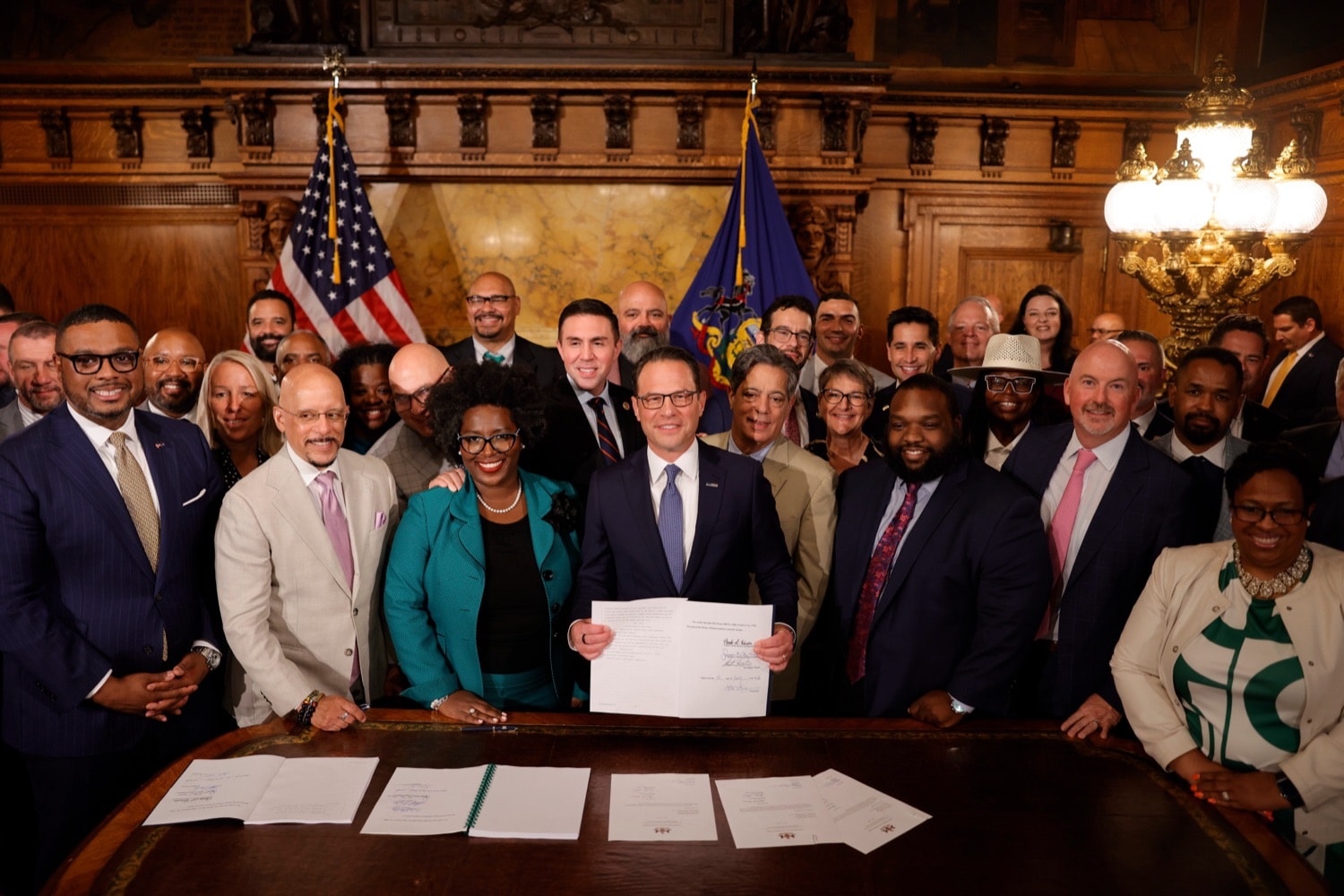
Governor Josh Shapiro signs the 2026–27 Pennsylvania state budget at the State Capitol in Harrisburg.
Black Businesses: New Funding Opportunities
Small businesses are the backbone of many Black communities — and the budget includes new resources aimed at supporting entrepreneurs.
- $3.75 million increase for the Historically Disadvantaged Business Program
- Continued funding for Main Street Matters
- $20 million to strengthen local commercial corridors
For Black-owned businesses seeking contracts, capital, and opportunities to grow, state investment can create new possibilities for minority contractors, small business owners, entrepreneurs, and community business districts.
Innovation & Future Jobs: Preparing for Tomorrow’s Economy
- $125 million for “Innovate in PA 2.0” — supporting startups, life sciences, technology companies, and innovation-driven businesses
The future economy will be built around technology, healthcare innovation, and entrepreneurship. Ensuring Black entrepreneurs and students have access to these opportunities will be critical.
Higher Education: Opportunities for College Students
The budget includes funding for Pennsylvania’s public universities, including the University of Pittsburgh, Penn State, Temple University, and Lincoln University — the nation’s first degree-granting HBCU.
- $10 million performance-based funding formula
- $5.9 million increase for Pennsylvania State Grant funding
- $10 million increase for Grow PA scholarships
College affordability continues to be a major challenge for Black families. Financial support can determine whether students enroll, graduate, and enter the workforce.
Public Safety: More Officers, More Prevention
- Four additional Pennsylvania State Police cadet classes
- Community violence prevention programs
- $62.1 million for violence intervention programs
For Black communities, public safety is about more than enforcement. It also includes youth programs, violence prevention, mental health resources, and community investment.
The question moving forward: How will these investments reach the neighborhoods that need them most?
Child Care & Families
- $5 million increase for child care worker recruitment and retention
- $3.75 million increase for Pre-K Counts
- Support for early childhood educators
Affordable, accessible child care is a workforce issue. Parents cannot work if quality child care is out of reach.
The Money Is Approved. The Impact Depends on Access.
The 2026–27 Pennsylvania budget represents billions in investment — but the question for Black Pennsylvania remains: Who benefits?
The next chapter is making sure Black communities know where the opportunities are, how to access funding, and whether these investments are reaching the neighborhoods they are intended to serve.
At Pittsburgh Urban Media, we’ll continue tracking the dollars, the programs, and the impact. Because budgets are more than numbers — they are about people.